+39 338 2990569 Loc. Puntone, Saturnia (GR) isicomori@gmail.com
WHAT YOU’LL FIND IN THIS GUIDE
- Where Maremma is, and yes, it’s Tuscany
- Why Maremma stayed empty
- What Maremma is famous for
- The towns worth your time
- The coast and the wild parks
- How far Maremma is from Rome and Florence
- When to go
- Three slow days in southern Maremma
- Where to stay in Maremma
- Questions people ask us about Maremma
Much of Tuscany looks the way it does because people shaped it for centuries. Villas, Renaissance squares, hills combed into vineyards.
Maremma had a harder history. For a long time it was marsh, malaria and grazing land, and anyone who could leave in summer did.
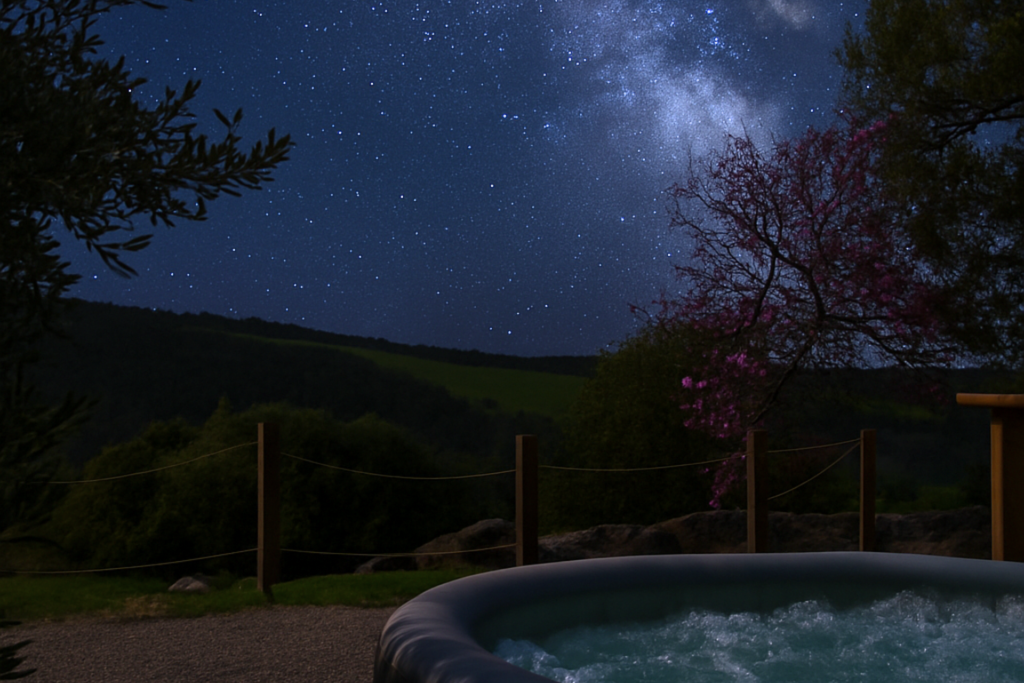
That history is why it feels different today. Fewer people, more room, and nights dark enough to see the Milky Way from a veranda.
We live near Saturnia, in the hills of southern Maremma. This is the guide we’d give a friend coming for the first time.
Where Maremma is, and yes, it’s Tuscany
Maremma is the south-western corner of Tuscany, between the Tyrrhenian Sea and Monte Amiata. Its heart is the province of Grosseto.
To the north it fades out around Cecina. To the south it crosses into Lazio, where Italians call it the Maremma laziale. About 5,000 square kilometres in all.
The name comes from the Latin maritima, the land by the sea. The sea is only half of it.
Inland there are olive groves, oak woods, volcanic tuff, and the long grey outline of Monte Amiata, an extinct volcano.
It’s also the emptiest part of the region. The province of Grosseto has about 48 people per square kilometre: a third of the Tuscan average, and one of the lowest figures in Italy.
You notice it on the roads. You notice it even more at night.
Why Maremma stayed empty
For most of its history, the coastal plain was a swamp.
Malaria came back every summer. In the nineteenth century even the government offices of Grosseto packed up for the hot months and moved to the hill town of Scansano, where the air was considered safe.
Shepherds came down from the mountains to spend the winter here, and went home in spring. Labourers came for the harvest, and some never went home at all.
There’s an old Tuscan folk song about those years. It’s called Maremma amara: bitter Maremma.
The Grand Dukes of Tuscany began draining the marshes in the eighteenth and nineteenth centuries. Malaria held on until after the Second World War, and Italy was declared free of it only in 1970.
Then, in the 1950s, a land reform broke up the large estates and gave the land to small farming families. Many of the plain, similar houses it built are still there, scattered across the fields.
That’s why, out in the countryside, there is still a lot of space between one house and the next.
That space is also why the sky is so dark. Around Saturnia the night sky sits at 3 to 4 on the Bortle scale, where the Milky Way is visible to the naked eye.
What Maremma is famous for
Maremma is known for its butteri, the local cowboys, and their long-horned cattle; for Etruscan towns carved out of tuff; for the hot springs of Saturnia; for long stretches of protected coast; and for simple country food.
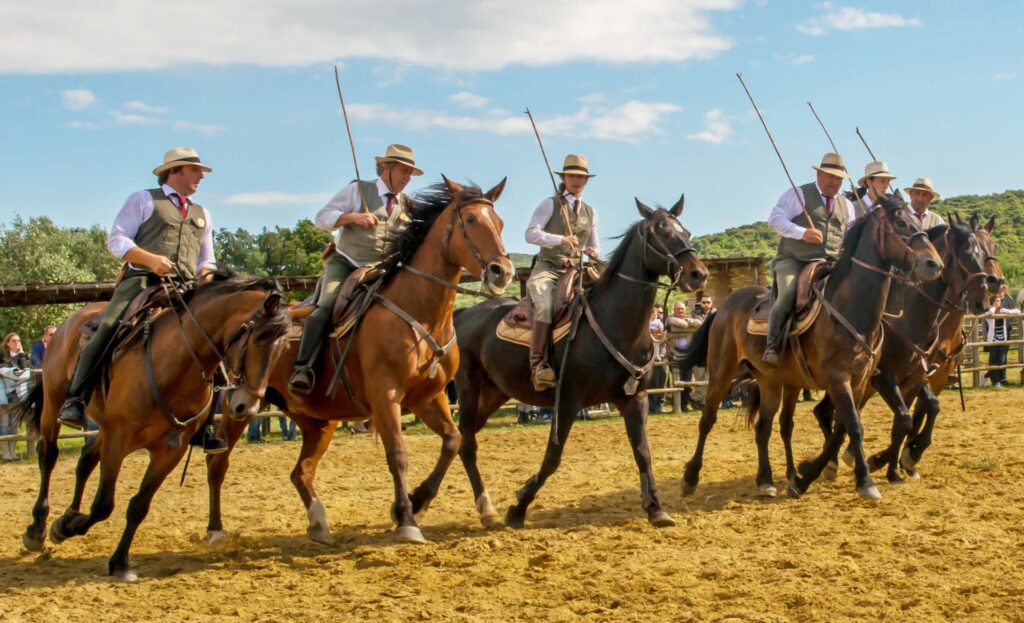
The butteri. They still work cattle on horseback, with a long hooked stick instead of a lasso. The cattle are Maremmana: big, grey, with horns that curve up like a lyre.
Americans sometimes hear the story of 1890, when Buffalo Bill’s Wild West show came to Rome and his cowboys competed with Italian butteri at riding wild horses.
Italians will tell you the butteri won. American accounts say the opposite. And the butteri who rode that day came from an estate south of Rome, in Lazio.
The ones in Maremma never needed the story.
The Etruscans. Long before Rome, this was Etruscan land. Their tombs are cut into the rock around Sovana, and their sunken roads, the vie cave, still run between walls of tuff taller than a house.
The hot springs. The water at Saturnia comes out of the ground at 37.5°C, all year round. We wrote a whole guide to the Saturnia hot springs, from ten minutes away.
The food. Wild boar, tortelli filled with ricotta and spinach, and acquacotta, a soup of bread, vegetables and an egg that began as the lunch of shepherds and charcoal burners. The local red is Morellino di Scansano.
The towns worth your time
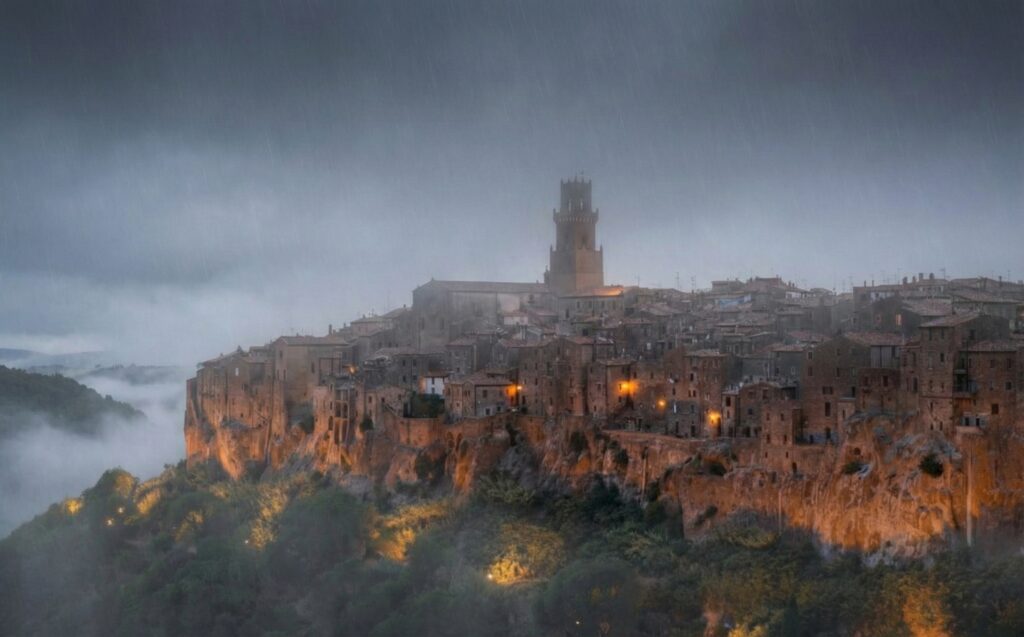
The towns people remember are Pitigliano, Sovana and Sorano, built on and into volcanic tuff, about half an hour to forty minutes from Saturnia.
Pitigliano rises straight out of its cliff and looks best from the road as you arrive. It was once called Little Jerusalem, for its old Jewish community.
Sovana is one street, a small square and an Etruscan necropolis just outside. Sorano hangs over a gorge, all steps and narrow lanes.
Our page on the tuff towns of Pitigliano, Sovana and Sorano has what to see in each.
Closer to us, Saturnia is a small village above the springs, and Montemerano is a walled hamlet with a few good osterie. Manciano looks out from its hill over half of southern Maremma.
Towards the sea, Capalbio is a little walled town that fills with Romans in summer.
Just outside it, Niki de Saint Phalle’s Tarot Garden covers a hillside with giant sculptures in mirror and mosaic. It opens only in the warmer months, so check the dates before you go.
Further north, Massa Marittima has a beautiful medieval square and cathedral. From Saturnia it’s well over an hour and a half, so give it a day of its own.
The coast and the wild parks
From Saturnia the sea is about forty-five minutes away, and long stretches of it are protected.
The Parco della Maremma, created in 1975, covers the Uccellina hills between Principina a Mare and Talamone: pine woods, marshes and beaches you reach on foot.
Maremmana cattle and horses graze on the plain around Alberese, and the butteri still work them there.
The Orbetello lagoon lies between two long sandbars, Giannella and Feniglia, that join Monte Argentario to the mainland. In autumn and winter, thousands of flamingos feed in its shallow water.
Monte Argentario is the most dramatic piece of coast: coves, the harbours of Porto Ercole and Porto Santo Stefano, and boats to the island of Giglio.
Inland, Monte Amiata goes the other way: chestnut woods, cooler air in August, and a wildlife park on its slopes.
A word about August. These beaches are where Italian families spend their holidays, and they’re busy. In June and September they’re a different place.
How far Maremma is from Rome and Florence
By car, the southern edge of Maremma, around Capalbio, is about an hour and forty minutes from Rome. Grosseto is about two hours from Florence.
Saturnia, in the middle of southern Maremma, is about two hours and twenty minutes from Rome and about two and a half from Florence.
From Rome’s Fiumicino airport you skip the city traffic and head straight up the coast road.
Direct trains from Rome to Grosseto take about an hour and forty minutes. From Florence the train goes through Siena with a change, and takes three hours or more.
Either way, you’ll want a car once you’re here. The towns, the springs and the beaches are spread out, and buses are few.
If you’re travelling between Rome and Florence, Maremma isn’t on the way. It sits west of the A1 motorway, towards the sea. It’s a detour worth two or three nights, not an afternoon stop.
When to go
For most people the best months are May, June and September: warm, long days, and the coast not yet full or already emptying.
In spring the fields are green and the roadsides fill with wild flowers. The sea is still cold; the hot springs are perfect.
July and August are hot and lively. The beaches are full, the hill towns hold festivals, and the evenings are the best part of the day.
September brings the grape harvest, a sea still warm from summer and a softer light. Later in autumn the olive harvest begins.
Winter is mild on the coast and quiet everywhere. Many places close, but the hot springs are at their best, with steam on the water on cold mornings.
Our own season runs from spring to the beginning of autumn.
Three slow days in southern Maremma
Three days are enough to see the heart of southern Maremma without rushing: one for the springs and the hills, one for the tuff towns, one for the coast.
Day one, water and hills. The Cascate del Mulino early in the morning, before the crowds. A long breakfast. In the afternoon, Saturnia village and Montemerano, and dinner in an osteria there.
Day two, the tuff towns. Pitigliano in the morning, lunch in Sorano or Sovana, then a walk along one of the vie cave in the late light.
Day three, the coast. The Parco della Maremma on foot, or the Orbetello lagoon and Monte Argentario if you’d rather see the sea from above. Back in the hills for the sunset.
With a fourth day, add Monte Amiata. Or do nothing at all. Here that counts as a plan.
Where to stay in Maremma
Stay on the coast if the beach is the point of your trip. Stay in the hills of southern Maremma if you want to reach everything within an hour.
The coast gives you beaches on foot and fish for dinner. In August it also gives you traffic.
Inland, around Saturnia, Manciano and Pitigliano, the hot springs are minutes away, the tuff towns about half an hour, the sea about forty-five minutes. The evenings are calmer and the sky is darker.
That’s where we are. Seme di Carota is a small farm ten minutes from the Saturnia hot springs, with two glamping Eco-Suites and three apartments in two small houses.
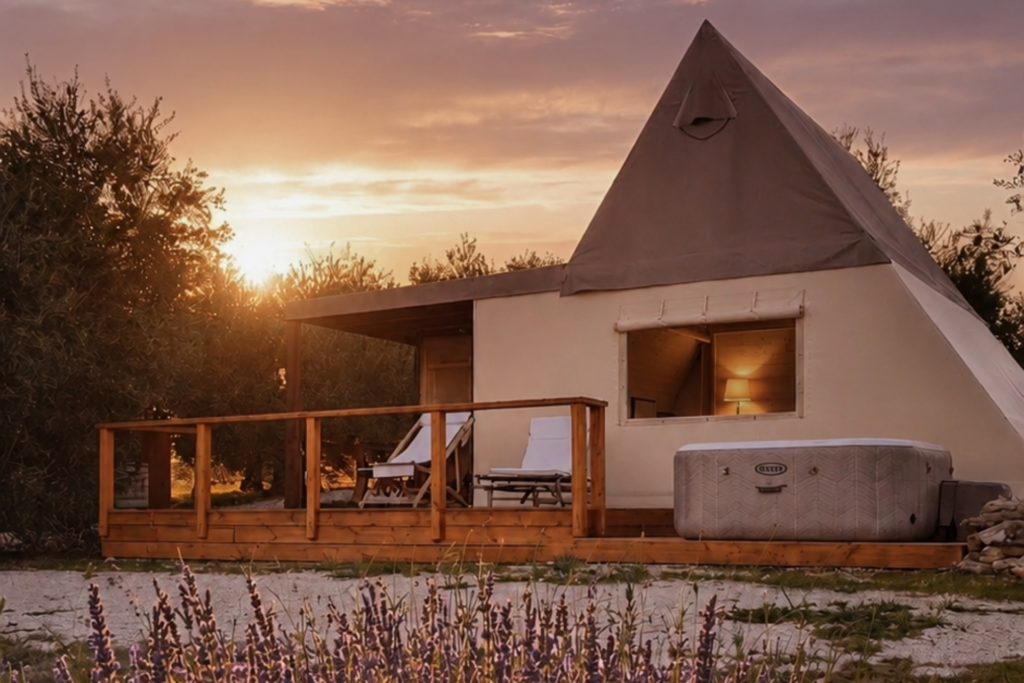
The Eco-Suites have a private hot tub with salt water on the veranda, and breakfast is served out there.
Families usually choose the apartments, with a kitchen and a garden. Everyone shares a panoramic salt-water pool.
For our guests there are massages among the olive trees or in the water. We don’t serve dinner, but we’ll happily tell you where to go.
If you’re curious about what an agriturismo in Tuscany actually is, we explained it with our own farm as the example.
Our surroundings page lists the places closest to us.
Questions about the area before you book? Write to us. We answer every message ourselves.
Questions people ask us about Maremma
Is Maremma part of Tuscany?
Mostly, yes. The Tuscan Maremma is the south-western corner of the region: the province of Grosseto and the coast south of Cecina. A smaller part continues south into Lazio, where it’s called the Maremma laziale.
What is Maremma famous for?
Its butteri cowboys and grey long-horned Maremmana cattle, Etruscan towns carved out of tuff such as Pitigliano and Sovana, the free hot springs of Saturnia, protected coast like the Parco della Maremma, and country food such as wild boar and acquacotta.
What does Maremma mean?
It comes from the Latin maritima, the land by the sea. In Tuscany the word also carries the memory of a harder past: marshes, malaria, and an old folk song called Maremma amara, bitter Maremma.
How far is Maremma from Rome?
About an hour and forty minutes by car to its southern edge around Capalbio, and about two hours and twenty minutes to Saturnia. Direct trains from Rome to Grosseto take about an hour and forty minutes.
Can you visit Maremma on a day trip from Florence?
You can, but you’ll spend most of the day driving: Grosseto is about two hours away and Saturnia about two and a half. Two or three nights make much more sense.
Do you need a car in Maremma?
Realistically, yes. Trains run along the coast, but the hill towns, the hot springs and the parks are spread out, and buses are infrequent, especially on Sundays.
What is the best time to visit Maremma?
May, June and September, for warm weather without the crowds. August is lively and busy on the coast. Winter is quiet and mild, and the best season for the hot springs.
What is the prettiest town in Maremma?
Many visitors would say Pitigliano, rising out of its tuff cliff. Sovana is smaller and quieter, and on the coast Capalbio is the one people remember.
Is Maremma good for families?
Yes. There is space, long sandy beaches, warm shallow pools at the hot springs, and animals to look for in the Parco della Maremma. Most families who stay with us choose our apartments, which have a kitchen and a garden.
Where should I stay in Maremma?
On the coast if the beach is your priority. In the hills of southern Maremma, around Saturnia, Manciano and Pitigliano, if you want the hot springs, the tuff towns and the sea all within an hour. We’re ten minutes from the Saturnia hot springs, with two glamping Eco-Suites and three apartments.
🌱 Glamping Seme di Carota
Saturnia, Maremma
Here, time is measured in sunsets, not hours.
Want to see more?
📖 The Saturnia hot springs, from ten minutes away
📖 A Tuscan farm stay with glamping Eco-Suites
📖 Pitigliano, Sovana and Sorano

